In a downtown Toronto condo, the view is often the listing, and a trained photographer controls it with four choices: focal length, which window and slice of skyline to frame, exposure and timing. A longer lens from deeper in the room makes the lake or the CN Tower fill more of the frame and read closer; a wide lens at the glass pushes it away. Of the 2,343 listings in our public archive, 750 are condo units, and in waterfront buildings the view is usually what separates one suite from the same layout ten floors down. We frame it carefully, and we never composite or fake it.
"We specialise in capturing views," says Cole Neophytou, founder of Amazing Photo Video, "controlling the view not just through lighting but through compression, selection, choosing what to highlight: how to make a water view look closer rather than farther, or a view of the CN Tower, and which views to highlight versus avoid."
Why the view carries a downtown listing
Downtown towers repeat the same floor plans stack by stack, so finishes and square footage often match the suite below. What changes is what you see from the sofa: Lake Ontario and the Toronto Islands, the CN Tower, a park, or the side of the next building.
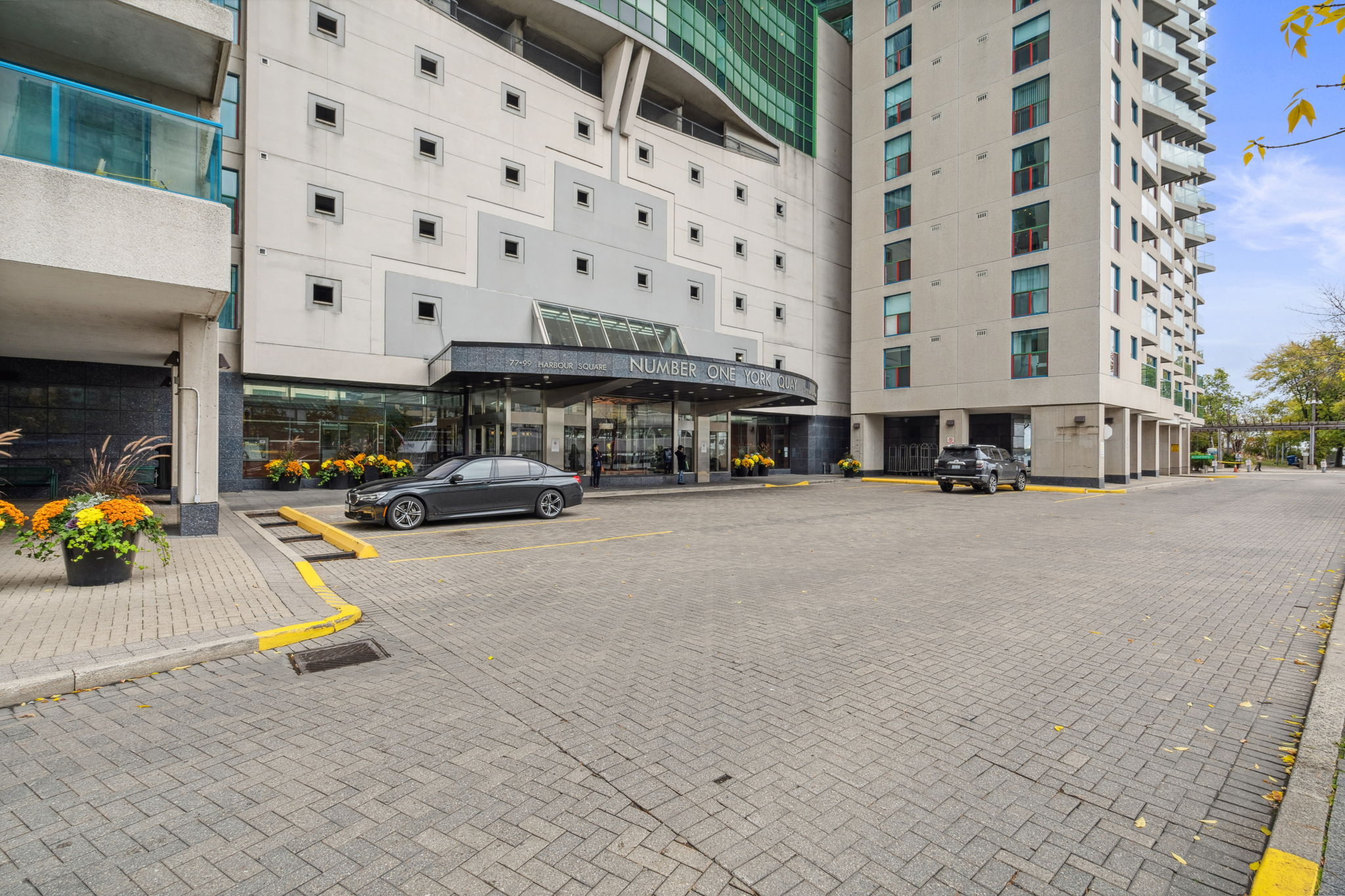
That is why waterfront listings lean so hard on the window. Our Harbourfront listings and the suites on our Harbour Square street page are built around lake and island views. Farther west, in King West and CityPlace, the frame is usually the skyline and the CN Tower.
Compression: making the lake or the CN Tower read closer
From any one spot, a longer focal length magnifies everything in front of the camera by the same amount, so a distant subject fills more of the frame. The lake or the tower takes up more of the picture and reads as closer. A wide lens does the opposite: it takes in more of the room, the window frame and the balcony, so the same tower becomes a small shape in the middle distance.
The useful move is combining position and focal length. Step back into the room and use a longer lens, and the window frame and furniture get smaller relative to the tower, because the camera is now farther from them while the tower is barely any farther away. Frame tightly and the CN Tower sits large above a slice of the living room, the way it feels standing there.
| Approach |
What it does to the view |
When we use it |
| Wide lens, close to the glass |
Shows the whole panorama; distant landmarks shrink |
Corner suites with a wide, unbroken outlook |
| Wide lens, from the room |
Shows the room and where the view sits in it |
Every listing, as the context shot |
| Longer lens, from deeper in the room |
Lake or tower fills more of the frame and reads closer |
Hero shots of a landmark or water view |
| Longer lens, at the glass |
Isolates one part of the view |
Cutting out a crane or the tower next door |
A compressed hero shot works best paired with a wide frame of the same room, so buyers see how strong the view is and where it sits in the suite. The tower is the tower, at that size, from that spot.
Selection: which window and which part of the skyline
Most suites have more than one view. The living room may face the lake while the primary bedroom looks at the tower, and a corner suite can offer both from one spot. We walk every window before shooting and decide which ones carry the listing.
| Feature |
Avoid or minimise |
| Lake Ontario and open water |
The wall of a neighbouring tower |
| The Toronto Islands and the ferry routes |
Active construction sites and cranes |
| The CN Tower and the downtown skyline |
Surface parking lots |
| Parks and green space below |
Rooftop mechanicals on the building next door |
| Sunset and city lights at dusk |
Expressway and rail corridors where they dominate the frame |
Minimising does not mean hiding. If a suite's view is half lake and half the tower next door, we find the angle where the lake leads and the tower sits at the edge, then shoot the wide context frame anyway. A buyer will stand at that window during the showing, and the photos should match what they see.
Exposure: hand-blended HDR so the room and the view both hold
Expose for the room and a bright window turns white. Expose for the lake and the room turns into a silhouette. Our HDR photography solves this by shooting several exposures from the same tripod position and blending every image by hand in Photoshop. The view in the finished photo is the view from that window, captured in the same sequence of frames. The blend balances brightness; it does not change what is outside.
Timing: clear day, blue hour, twilight
Clear day. Haze over the lake flattens the islands, and low cloud can hide the top of the CN Tower. For a view-led listing we would rather move the shoot a day than shoot a grey window.
Direction. South-facing lake views are bright most of the day. West-facing suites get low sun late in the day, which is beautiful at the window and harsh across the room.
Blue hour and twilight. The window between sunset and dark, when the sky still has colour and the city lights are on, is when skyline and CN Tower views are at their best. The interior lights and the sky can be balanced in the same frame. Twilight photography is $249.99 for up to 15 edited images. In December the sun sets before 5 p.m. in Toronto, so a winter twilight shoot does not mean a late night.
Balconies, reflections and clean glass
- Clean the glass. A smudge at eye level shows up in every wide shot. Clean inside, and the balcony door outside where you can reach it.
- Clear and style the balcony. It sits between the camera and the view in most living-room frames. Two chairs and a small table read well; storage bins and a barbecue cover do not.
- Manage reflections. At dusk, lamps near the glass reflect straight into the view. We switch off or move what reflects and angle the camera off the glass. No photographer, tripod or lamp should appear in a window.
- Shoot from the balcony when it helps. Stepping outside removes the glass entirely for the cleanest view frame, and the railing can lead the eye to the lake.
The honesty line
We never add, move or invent what is out the window, and we never misrepresent a property. Choosing angles, focal length and what to feature is composition. Inventing what isn't there is not something we do. If the outlook is partly blocked, we shoot it at its best honest angle and include a wide frame that shows the whole picture.
For the rest of the media plan, see our guide to Harbour Square condo photography and video and luxury condo listing video downtown.
Frequently asked questions
How do you photograph a condo view without blowing out the window?
We shoot several exposures from the same tripod position and blend them by hand in Photoshop, so the room is naturally bright and the lake, islands or skyline keep their detail. Clean glass, fully open blinds and switching off lamps that reflect in the window make the biggest difference on the day.
What is lens compression in real estate photography?
A longer focal length magnifies distant subjects so they fill more of the frame. Shot from deeper in the room with a longer lens, the lake or CN Tower reads closer and larger relative to the window and furniture. A wide lens does the opposite and makes the view look farther away.
Do you replace or edit the view out the window?
No. We never add, move or invent anything in a view. Hand-blended HDR balances the brightness of exposures taken from the same position; it does not change what is outside. We choose which window, which part of the skyline and which focal length to use, and that is composition.
What is the best time to photograph a condo with a view?
A clear day for lake and island views, and blue hour or twilight for skyline and CN Tower views, when the sky still has colour and the city lights are on. In December, sunset in Toronto comes before 5 p.m.
What if the view is partly blocked by another building?
We find the angle where the open part of the view leads and still include a wide frame showing the whole outlook, so the photos match what a buyer sees at the showing.
Book a condo shoot
Tell us the suite, the floor and which way it faces, and we will plan the timing around the view. See every package on our pricing page or book your shoot.
 Cole Neophytou